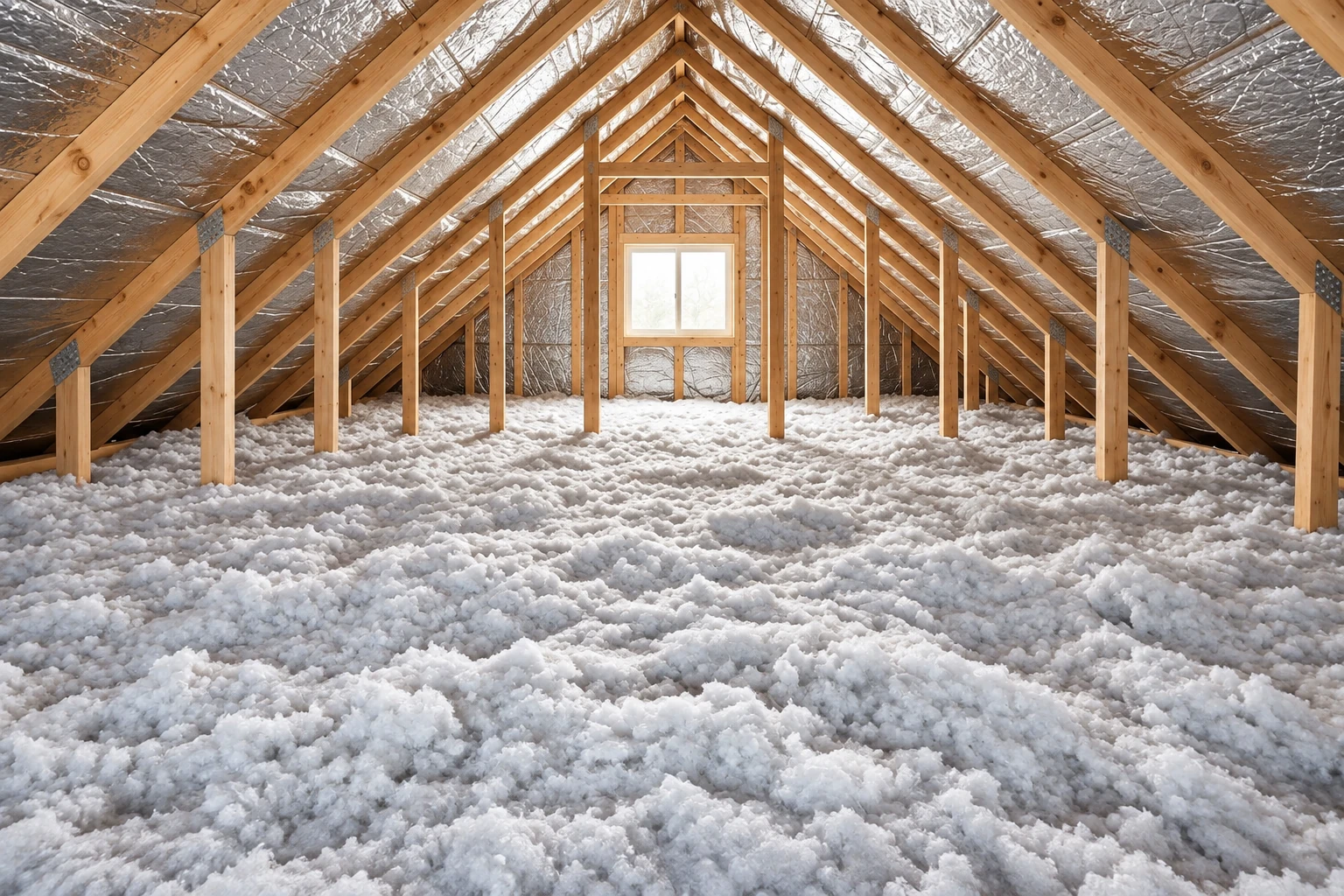
Blown-in insulation in Fort Worth TX - even coverage over a sealed attic
Hot upstairs rooms and a climbing power bill usually mean a thin attic. We seal the gaps first, then blow in an even layer.
- Services
- 16
- Service areas
- 12
Book a blown-in insulation estimate for your attic
I'll take you through what's up there now, so you see the problem for yourself.
Request an estimateIs blown-in insulation right for my Fort Worth attic?
Blown-in insulation is loose fiberglass or cellulose blown through a hose across your attic floor. In Fort Worth it's a common, fairly inexpensive way to fill the gaps and thin spots that leave upstairs rooms hot in summer and drafty in winter.
Most people call because the room over the garage won't cool down or the power bill keeps going up, and when I get into the attic I usually find a few inches of old, settled insulation and open gaps that need attic air sealing. The price mostly turns on how big the attic is, how much is already up there, which material you pick and whether anything has to be sealed, repaired or removed first. The schedule turns on that same prep, because a roof leak has to be fixed before anything goes in. Your estimate gives you the figure for your own attic.
How we put in blown-in insulation
I start by going up and measuring how many inches you already have, and I look for roof leaks, stained wood, droppings and recessed lights, because insulation laid over any of those won't do much for you. Then our crew seals the gaps around lights, pipes, wires and the attic hatch so the new layer isn't fighting a draft. Around recessed lights that aren't rated for contact with insulation, we put up a barrier first, and we keep the vents along the eaves clear so the attic can still breathe. I talk through fiberglass or cellulose with you, and we blow it in at the density the maker calls for instead of fluffing it to stretch the bags. We carry full depth out to the edges, since thin coverage at the eaves is where a lot of attics lose heat, then we clean up.
Blown-in is often one part of a bigger fix. If some rooms stay uneven after the attic is done, home insulation looks at the walls, floors and crawl space too. When the old material is soaked, moldy or full of droppings, we handle insulation removal first, because new fill on top just buries the problem.
What shapes blown-in insulation in Fort Worth
Fort Worth has adopted an energy code, and recommended insulation levels change with the climate and with where in the house the insulation goes. So how deep we fill your attic follows what an attic in our climate needs, not whatever the bags happen to cover.
A lot of houses here run their ductwork through the attic, and that space gets very hot in our summers, so I look at the ducts before I recommend anything. Spray foam costs more and seals air while it insulates, and when the ducts live up there it can be worth it. For most attics, though, sealing the gaps and topping up with loose fill usually wins. In older houses we often find a thin layer that has settled for years, and we see the same thing on jobs in Haltom City and North Richland Hills.
Why call us for blown-in insulation
The owner does your estimate
I come out, go up in your attic and give you the estimate myself, and I run the work alongside our install crew. The person who saw your attic is the one making sure it's done the way we talked about.
We find the leaks first
Before any insulation goes in, we look for roof leaks, wet wood and droppings and deal with them, because new fill over a problem keeps the problem. If your roof needs work first, I'll tell you that instead of selling you bags.
Learned the trade in Fort Worth
I left a desk job to learn insulation on a Fort Worth crew, and I started this business in 2020. I explain each attic the way I'd want it explained to me, so you know your house a little better when we leave.
Fully licensed and insured
We're fully licensed and insured. That matters in an attic, where our crew works around wiring, ductwork and the drywall of your ceilings.
- Phone
- (817) 349-3679
- Hours
- Mon–Fri: 8 AM–11 PM, Sat–Sun: 6 AM–10 PM
- Location
- Fort Worth, TX 76102
On this job the order of the work matters more than the material, so tell us about your attic and I'll come take a look.
Get an estimate for blown-in insulation in your attic
Send the form and we'll reply within one business day to set a time. Then I'll come out, look at your attic and give you a free estimate on site, with no obligation. It helps to mention how you get into the attic, what's up there now, any recessed lights and any roof leaks you know about.
- Phone
- (817) 349-3679
- Location
- Fort Worth, TX 76102
- Hours
- Mon–Fri: 8 AM–11 PM, Sat–Sun: 6 AM–10 PM
- Credentials
- Fully licensed and insured.
Frequently asked questions
How much does blown-in insulation cost in Fort Worth?
Blown-in insulation in Dallas usually costs about $800 to $2,000 per project, which is a close guide for Fort Worth homes. The size of your attic and any prep that has to come first move it the most. Your estimate gives you the number for your house.
What is the best blown-in insulation for a Fort Worth attic, cellulose or fiberglass?
Cellulose usually gives you more for the money, because it costs less than loose-fill fiberglass and slows air moving through the attic better. The catch is water, since cellulose breaks down once it gets soaked, so if your roof has a history of leaks I lean toward fiberglass. Cellulose is also heavy, so it isn't recommended for mobile home ceilings.
Do I need to seal my attic before adding blown-in insulation?
Yes, sealing comes first, and we plan it as the first step of the job. Loose fill slows heat but doesn't stop air, so a draft coming up through an open gap carries heat right past it.
Can blown-in insulation go over the old insulation in my attic?
Usually, yes. New insulation doesn't have to match the kind already in your attic, so loose fill can go right over old fiberglass batts or blankets, as long as what's there is dry and clean.
What causes an attic to need repairs before new insulation goes in?
A leaky roof, moldy framing, poor ventilation and old knob and tube wiring are the usual reasons, and a professional should fix each one before insulation goes over it. Some older attics also have vermiculite, a pea-size, flaky gray fill that may contain asbestos, and it stays undisturbed until an approved lab tests it. None of this is unusual. It just changes the order of the work.
How long does blown-in insulation last in an attic?
The cellulose makers' trade group says properly installed cellulose can work well for decades. Loose fill does settle as gravity and vibration pack it down, about 10 to 20 percent for cellulose and 2 to 4 percent for fiberglass, which is one reason the density it's blown at matters.
Other work that often goes with it
Home insulation
When the attic is only part of the problem, a whole-house look finds the walls, floors and crawl space that keep some rooms hotter or colder than the rest.
Insulation removal
If old insulation got soaked from a roof leak or packed with droppings, pulling it out first gives the new layer a clean, dry attic to sit in.